Use the Thomas Moore Feed Equine Feed Chart as a helpful reference when reviewing feeding options for your horse. This chart provides an easy way to compare equine feed information and support informed feeding decisions.
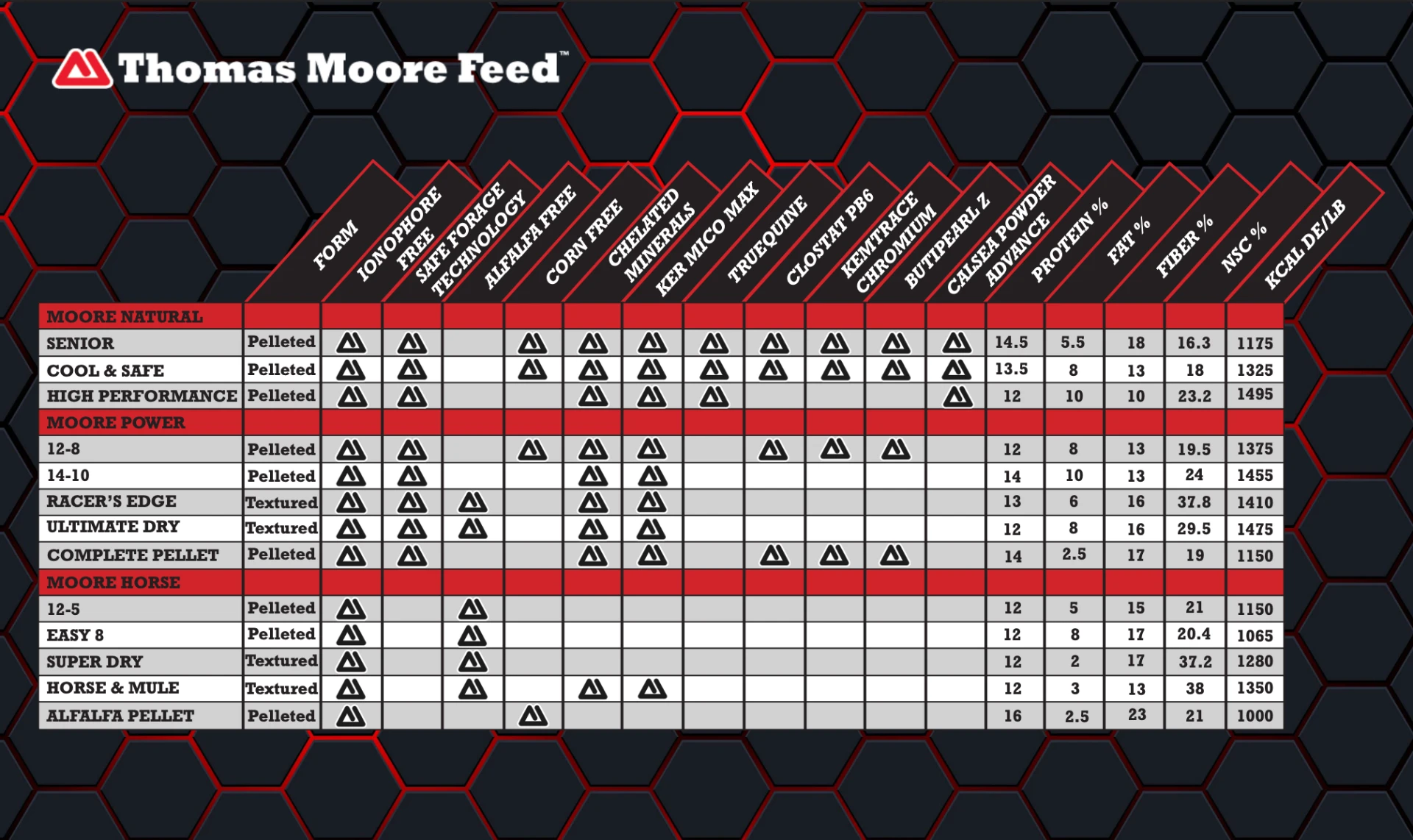

Protein is an essential nutrient in horse feed, playing a crucial role in building and repairing body tissues, including muscles, hooves, hair, and skin.
Fiber is crucial for a horse’s digestive health, providing energy and maintaining a healthy gut.
NSC levels matter because they show the amount of starches and sugars in feed, which is important for horses with metabolic or carbohydrate sensitivities.
Feeds are specifically formulated for horses with carbohydrate sensitivities like insulin resistance or laminitis, aiming to minimize the risk of metabolic issues by drastically reducing starch and sugar intake.
Fat is a valuable energy source, especially for horses with high energy demands or those needing to gain weight.
Vitamins and minerals act as essential micronutrients that support various bodily functions, including metabolism, immune response, bone health, and more.
Primarily for its mineral content, particularly iodine, and its potential to support digestion and coat health.
Yeast additives aim to improve digestive health and nutrient absorption by promoting a balanced gut microbiome. They can also offer benefits like enhanced hoof health, immune support, and better utilization of fibrous feeds.

We use cookies to improve your experience on our site. By using our site, you consent to cookies.
Manage your cookie preferences below:
Essential cookies enable basic functions and are necessary for the proper function of the website.
These cookies are needed for adding comments on this website.
Google reCAPTCHA helps protect websites from spam and abuse by verifying user interactions through challenges.
Google Tag Manager simplifies the management of marketing tags on your website without code changes.
Statistics cookies collect information anonymously. This information helps us understand how visitors use our website.
Google Analytics is a powerful tool that tracks and analyzes website traffic for informed marketing decisions.
Service URL: policies.google.com (opens in a new window)
SourceBuster is used by WooCommerce for order attribution based on user source.
You can find more information in our Cookie Policy and Privacy Policy.